
"knapsack coffee picker"
145300 article(s) found
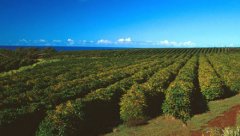
Common sense of Coffee Tree planting
After 3 or 4 years of growth, the coffee tree matures and begins to bear fruit, and one fruit will be arranged in clusters or clusters along the branches. Of course, the coffee beans we see are the seeds of coffee trees. The outside of the seed is a layer of peel, which can be picked as soon as it turns red. Under the red skin (exocarp) there is a layer of pulp (mesocarp), inside is a small thin layer, and then there is a layer of parchment

Basic knowledge of planting and picking Coffee trees
One of the characteristics of a coffee tree is that its fruit can bear fruit several times a year, and another is that flowers and fruits coexist at different stages of ripening. If the fruit is too ripe, the beans in it will rot. If the beans are not ripe, the beans will not ripen by themselves. So bean pickers often go through the same tree several times to find ripe fruit, but try their best.

Coffee planting and picking-Kenya Coffee picking season
Coffee planting and picking-during the Kenyan coffee picking season, this method uses random sticks to hit ripe fruit or shake coffee branches, causing the fruit to fall and pile up. Larger estates use large harvesters, while small and medium-sized farms harvest with a sea of people mobilized by the whole family. This method of shaking the fruit off the ground is easier to mix with impurities and defective beans than the hand-picking method.

The best coffee in Costa Rica Don Eli processing plant coffee planting treatment
Professional baristas please follow the coffee workshop (Wechat official account cafe_style) Pastora and Canet are two small farms, in this case they are mixed according to the number of days of harvest. Carlos and his entire family are very committed to Don Eli Farm and the miniature mill (micro mill). With the support of his family, Carlos was able to manage the farm and
The study of fine coffee teaches you to plant coffee trees correctly.
One of the characteristics of a coffee tree is that its fruit can bear fruit several times a year, and another is that flowers and fruits coexist at different stages of ripening. If the fruit is too ripe, the beans in it will rot. If the beans are not ripe, the beans will not ripen by themselves. So bean pickers often go through the same tree several times to find ripe fruit, but try their best.
Fine Coffee Science explains the picking of coffee beans in detail
After 3 or 4 years of growth, the coffee tree matures and begins to bear fruit, and one fruit will be arranged in clusters or clusters along the branches. Of course, the coffee beans we see are the seeds of coffee trees. The outside of the seed is a layer of peel, which can be picked as soon as it turns red. Under the red skin (exocarp) there is a layer of pulp (mesocarp), inside is a small thin layer, and then there is a layer of parchment

When is the better time to pick coffee beans in the growing environment?
When is it better to pick coffee beans? most normal coffee trees in the growing environment will produce coffee cherries that are smaller than the average. There is only one bean in the cherry. This kind of single-bean coffee has different names: single round coffee beans, beads or spiral coffee beans. It has no flat side but is small and almost completely round. Sort out these beans and put them in one.

Summary of the conversion rate of cooked beans in the training and teaching of coffee roasters
Every coffee bean should be cherished. There is such a set of data: a coffee tree can pick 3-5 kilograms of coffee fruit a year. After complex processing, it can only get parchment coffee, which accounts for 5 pounds of coffee fruit. The processing plant with better drying rate can probably get more than 5 rough processed beans. The conversion rate from seed to ripe bean is about 5 kg fruit = 1 kg.

Introduction of coffee bean flavor characteristics of micro-processing plant in Costa Rica coffee bean Tarrazu production area
Professional baristas please follow the coffee workshop (Wechat official account cafe_style) Pastora and Canet are two small farms, in this case they are mixed according to the number of days of harvest. Carlos and his entire family are very committed to Don Eli Farm and the miniature mill (micro mill). With the support of his family, Carlos was able to manage both the farm and the office.

China's most suitable microclimate for coffee cultivation Introduction to coffee cultivation on the environmental needs
China's most suitable microclimate for growing coffee Introduction to the environmental needs of coffee cultivation The origin of coffee trees is Ethiopia in Africa. Coffee tree in botany, belongs to the Rubiaceae coffee subgenus evergreen tree, and generally known as coffee beans, survey is the coffee tree fruit seeds, only because the shape like beans, so called coffee beans. Climate is coffee growing

The way of picking and processing of Coffee an introduction to the process Cooperative
Coffee picking and processing process Cooperative introduction to the picking itself, there are two ways: one is picking in pieces, which is also called peeling, that is, picking all the beans after a trip in the garden, and picking in pieces is also divided into manual picking and mechanical picking; the other is selective picking, which is divided into 810 days between trees.

Photo introduction of what kind of fruit the coffee beans have just picked
Pictures of what kind of fruit coffee beans have just been picked. In Brazil, people have tried many times to reduce these costs by mechanical picking. The machine can shake branches across the coffee tree so that the berries that become loose because they are ripe will fall into the funnel. The mechanical picker is only suitable in areas with better natural conditions, and it needs to be adjusted in advance, because only

Ideally, how much is a cup of coffee worth?
Pickers are shuttling through coffee plantations on the outskirts of San Jose, Costa Rica, picking coffee beans to Cajuerari hanging on his chest. In Central America, the main coffee producing area of the world, Cajuella is both a coffee basket and a bookkeeping unit. Pick a card of Huera (15kg) coffee beans and the wage is $2. Although it's not enough to buy the cheapest cup at Starbucks in San Jose.

Common drinks in cafes what do you sell in your cafe?
Green tea likes and drinks green tea most often. I remember there is such a sentence in the advertisement: the beverage that stores the mood. Yes, take a sip, astringent, sweet and full of freshness, and as if back to the tea forest, see the green mountains, experience the busyness of tea pickers. A breath from nature comes from the feet, and I am the combination of nature. I like to hold the bottle of green tea and look through it.

The difference between mechanical picking and manual picking of coffee beans-the difference between cocoa beans and coffee beans
The difference between mechanical picking and manual picking of coffee beans-the biggest advantage of manual picking is that the picking process is more fine, which can reduce some losses in the picking process. First, pickers can pick and screen at the same time and discard green and rotten fruits. Second, the picking basket is relatively small and easy to carry, and the grapes squeeze each other so that they are relatively broken.

How much does a cup of coffee cost?
Pickers pluck coffee beans from a coffee plantation on the outskirts of San Jose, Costa Rica, to a Cajueira hanging from his chest. In Central America, the world's main coffee-producing region, cajuela is both a coffee basket and a unit of work. Pick a cajuela (15kg) coffee bean for $2. Although that's not enough to buy a cup at Starbucks in San Jose.

The fruit of coffee tree is picked. Introduction to the process of how to make coffee.
In the washing type, the harvested fruit is poured into the sink, the floating matter is removed, the fruit in the water is moved to the pulp removal machine, the outer skin and pulp are removed, and then put back into the tank to remove the floating matter, the core in the water is poured into the fermentation tank, soaked for half a day or one day, the colloid on the surface of fermented beans is removed, washed, dried or mechanically dried, and the endocarp is removed on the sheller to form commercial raw coffee beans.

How much is a cup of coffee worth? Calculation under ideal condition
Pickers are shuttling through coffee plantations on the outskirts of San Jose, Costa Rica, picking coffee beans to Cajuerari hanging on his chest. In Central America, the main coffee producing area of the world, Cajuella is both a coffee basket and a bookkeeping unit. Pick a card of Huera (15kg) coffee beans and the wage is $2. Although it's not enough to buy the cheapest cup at Starbucks in San Jose.

How to grow coffee beans? the planting conditions of coffee beans
Professional coffee knowledge exchange more coffee bean information please follow Coffee Workshop (Wechat official account cafe_style) Street-Coffee planting conditions brief introduction Coffee Tree Origin in Ethiopia, Africa. In botany, coffee tree belongs to the evergreen tree of the subgenus Rubiaceae, and coffee beans, commonly known as coffee beans, are the seeds of the fruit of coffee trees, just because they are shaped like beans.

Introduction of the whole process from coffee tree to fruiting
One of the characteristics of a coffee tree is that its fruit can bear fruit several times a year, and another is that flowers and fruits (also known as cherries) coexist at different stages of ripening. The whole coffee harvest is swayed by the vagaries of nature. If the fruit is too ripe, the beans in it will rot. If it is not ripe enough, the beans picked will not ripen by themselves. So bean pickers have to go through